
Word Stress in Portuguese – Part 1
Understanding word stress patterns is key if you're serious about improving your Portuguese pronunciation.

Understanding word stress patterns is key if you're serious about improving your Portuguese pronunciation.
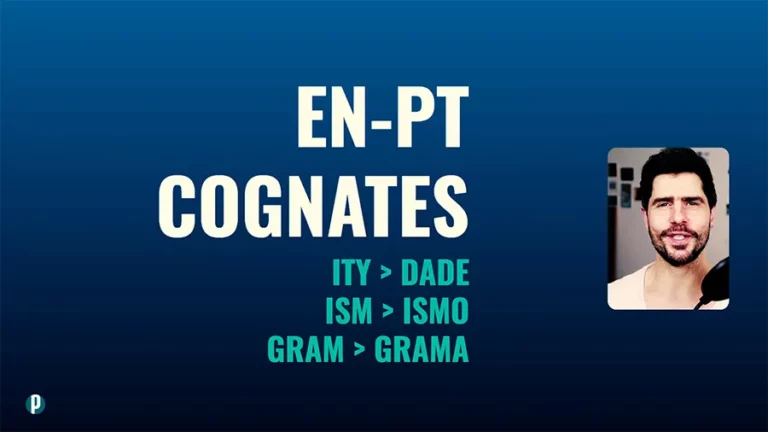
Thanks to English-Portuguese cognates, you can boost your Portuguese vocabulary overnight with minimal effort.

Learning to count from 101 to 1000 in Portuguese builds directly on what you already know—just add hundreds and keep going.
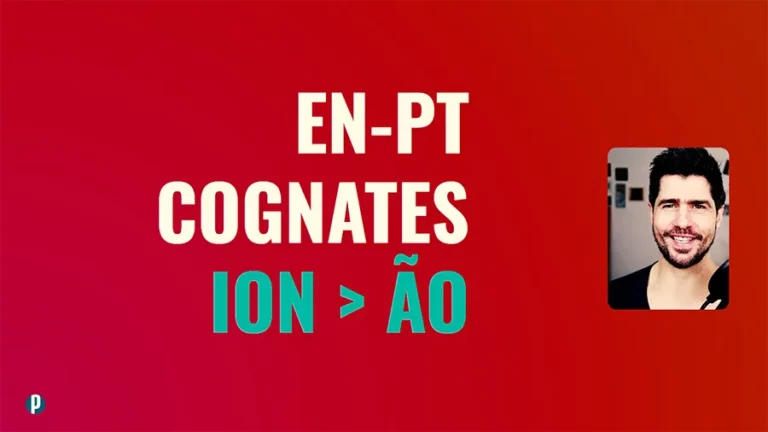
Thanks to English-Portuguese cognates, you can boost your Portuguese vocabulary overnight with minimal effort.

'Em' is one of Portuguese’s most flexible prepositions, often translating to 'in', 'on', or 'at' depending on the context.

To say things like 'a book' or 'an apple' in Portuguese, you’ll need indefinite articles that match the gender and number of the noun.
Counting from 21 to 100 in Portuguese is all about combining tens and units—and it’s simpler than it looks.

Not all Portuguese verbs fit neatly into regular or irregular categories—some sit in the middle, following patterns with a twist.
The /ʃ/ sound is arguably the most prominent sound in European Portuguese. Let's dive in.
Although it may seem redundant, it's common in Portuguese to use 'é que' right after question words.

Among Portuguese regular verbs, those ending in -ir follow a consistent pattern that’s easy to master once you know the rules.

Learning to count from 1 to 20 in Portuguese lays the foundation for everyday conversations—from telling your age to ordering at a café.

Definite articles in Portuguese are essential for marking known or specific nouns—and they change with gender and number.

This lesson covers the conjugation of regular Portuguese verbs ending in -er.

Master the letter S in Portuguese by exploring its multiple sounds and pronunciation rules.

This lesson covers the conjugation of regular Portuguese verbs ending in -ar.
Ever noticed how Portuguese sometimes puts question words like como at the end of a sentence? This lesson shows you how—and when—it happens.

You already know the subject pronouns in English: I, you, she, he, it, we, they. Now it’s time to see how they translate into Portuguese—and learn a few quirks about how they’re used.