Report a problem


Built for the hard part of European Portuguese.
Best for learners A2 and up who can read the language but still struggle to follow real speech and sound natural.
No card required
Recently added
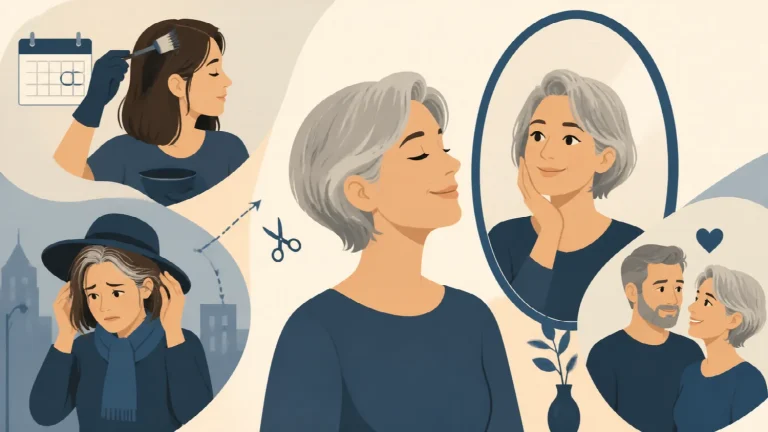
AppearanceMindsetGray hairNatural agingSelf-acceptance
Sem tinta e sem chapéu
After twenty years of dyeing her hair, Luísa stopped.
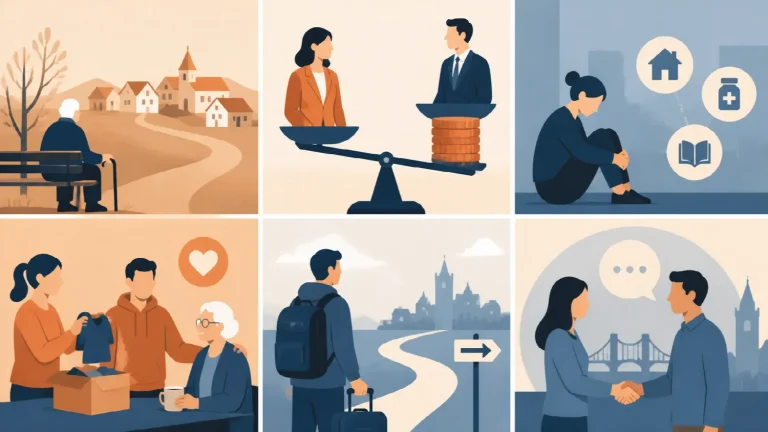
SocietyPublic debateSocial issues
Temas sociais
Five topics that come up often in public debate. Match each text to the correct label.
The Mistake Most EP Learners Make After A2
You reached A2. You can read a menu, follow a graded reader, fill in the gaps on a worksheet, maybe hold a slow, careful exchange with someone who is being kind to you. The textbook says you are past the beginner stage, and on paper you are.
Then you sit down with a real conversation. Two people from Lisbon talking at normal speed. A podcast. A radio segment. And it collapses into noise. You catch a word here, a name there, and the rest slides past before you can grab it. You know these words. You would recognize every one of them on the page. Spoken, they are gone.
Almost everyone hits this. What matters is what you do next, because most people make the same wrong move.
The mistake
The mistake is doubling down on what got you to A2.
More grammar. Another verb-tense deep dive. A bigger vocabulary list. Another textbook chapter. It feels like the obvious response: study got you this far, so more study should get you further. That instinct is exactly why so many learners stall right here and stay stalled for a year or more.
Here is the problem. The thing blocking you at A2 in European Portuguese is not a grammar gap. You are not failing to understand that conversation because you are missing the subjunctive. You are failing to understand it because you have never trained your ear on how European Portuguese actually sounds when a native speaker says it at full speed. Grinding through more textbook material makes your reading better and your grammar cleaner. It does almost nothing for your listening, because listening is a separate skill and you have not been practicing it.
Why grammar is not the bottleneck
Read the transcript of the conversation you could not follow, and you will probably understand most of it. That is the tell. If you can read it but not hear it, the words are not the issue. The sound is.
European Portuguese is unusually hard to decode by ear, and it is hard in a specific way. Vowels in unstressed positions shrink or disappear entirely. Consonants get swallowed. The rhythm is stress-timed, so speakers compress everything between the stressed beats and the words run together into shapes that look nothing like the tidy, fully-pronounced versions you learned. The word you know as a clean row of letters arrives as a smear of sound, and your brain, which only ever practiced the written shape, has no match for it.
This is the listening cliff, and it is why European Portuguese trips up learners who do fine with the written language or with Brazilian Portuguese. No amount of extra grammar closes it, because grammar was never the thing in the way.
A2 is a floor, not a finish line
Part of what makes this moment so disorienting is that A2 gets treated as an arrival. You passed the checkpoint, so it feels like you should be able to function. Even Portugal’s citizenship language requirement sits at A2, which quietly reinforces the idea that A2 is the destination.
It is not. A2 is the point where you have enough of the language to start the real work, not the point where the work is done. If your goal is to actually understand the people around you, and not just to clear an exam, then A2 is a floor to build on. The learners who break through are the ones who stop treating it as a summit and start treating it as a starting line for a different kind of practice.
And to be clear, this is not the vague “plateau” that gets talked about in every language-learning forum. General plateau advice (mix it up, stay motivated, be patient) is not wrong, but it is too blurry to help here, because it never names the actual obstacle. Your problem has a name and a cause. That is good news, because a specific problem has a specific fix.
What to do instead
Train the skill that is actually failing: comprehension of real spoken European Portuguese.
That means listening to authentic EP, at your level, on purpose, and often. Not background noise while you cook, though passive exposure has its place, but focused sessions where you work to catch what is being said. The trick is to make real material accessible without watering it down. A few things make that possible:
Listen with the transcript in reach, so when a stretch turns to noise you can see what you missed and connect the sound to the words you already know. Replay the hard parts. Slow the audio down at first, then bring it back to full speed once your ear catches up. Check your understanding instead of assuming it. And when a word or expression finally clicks, capture it so it sticks rather than evaporating by tomorrow.
Do this consistently and the noise starts resolving into words. Not because your grammar improved, but because your ear finally has a library of real EP sound patterns to match against. This is the part textbook study skips, and it is the part that actually moves you off A2.
Where Portuguesepedia fits
This is the exact problem Portuguesepedia is built around. The Listen library is real European Portuguese, tagged by level and topic, so you can start at A2 and work up rather than being thrown at native-speed content with no support. Every clip pairs the audio with a synced transcript you can tap through line by line, on-demand translation for anything you get stuck on, playback-speed control, and a quick AI quiz to check whether you actually caught the meaning or just told yourself you did. When an expression clicks, you can save it to Recall and let spaced repetition bring it back until it stays.
It is not more textbook. It is the training your ear has been missing since A2. Pick a topic you care about, start listening, and give it a few weeks. The cliff does not vanish overnight, but it stops being a wall and starts being a slope.
Real European Portuguese is harder than the textbook
If you can read Portuguese but real speech is still hard to follow, Portuguesepedia is built for that gap. A deep library of real EP audio, organized by level and topic, with AI-powered practice built in.
No card required.
What learners say
I love the mix of formats. The listening pieces, short reads, exercises, and idioms cover different angles, so I don't get stuck doing the same thing. It keeps me coming back.
~ Olivia ~
It doesn’t feel like studying in the boring sense. The tone is light, but the practice is solid, and I’ve noticed I can put sentences together more easily.
~ Giulia ~
Everything feels well put together. I'll listen to something at my level, check a quick explanation when I'm confused, and then do a practice exercise. Everything I need is in one place and easy to find.
~ Liam ~
Portuguese used to feel messy, like I was putting in effort but not getting results. With Portuguesepedia, I can focus on what I actually need, and I’ve started noticing real improvement week by week.
~ Ebba ~
Something clicked after a few weeks. Real Portuguese started making more sense — not just on paper, but when I'm actually listening. I hadn't felt that kind of progress before.
~ Maria ~
I’d been trying to learn Portuguese for years, but I never felt confident using it. Textbooks were too much, and speaking classes made me freeze. With Portuguesepedia, things finally started to make sense.
~ Emely ~