A2+
Portuguese Object Pronouns
Portuguese object pronouns can be tricky at first—especially when deciding whether they’re direct or indirect, and where they belong in a sentence.

Portuguese object pronouns can be tricky at first—especially when deciding whether they’re direct or indirect, and where they belong in a sentence.
In Portuguese, the reflexive pronoun se isn’t just a detail—it can completely change a verb’s meaning and how the sentence works.

Defective verbs in Portuguese behave differently: they skip most conjugations and appear only in third-person forms, often with object pronouns instead of subjects.
Understanding how Portuguese handles conditional sentences means learning how to pair verb tenses across clauses—just like English does with 'if' and its consequences.
You might know 'se' as the word for 'if' or as part of reflexive verbs—but it also plays a key role in impersonal sentences.

While both adjectives and adverbs add detail to sentences, they do so in distinct ways—this article will help you spot the difference with ease.

When the action is imagined, wished for, or dependent on something else—especially in the past—Portuguese turns to the Past Subjunctive.
Understanding which spellings align with the reform is key—especially when encountering mixed usage in newspapers, books, and online content.

The key to unlocking Imperative forms in Portuguese lies in the Present Subjunctive, which serves as the foundation for commands and requests.
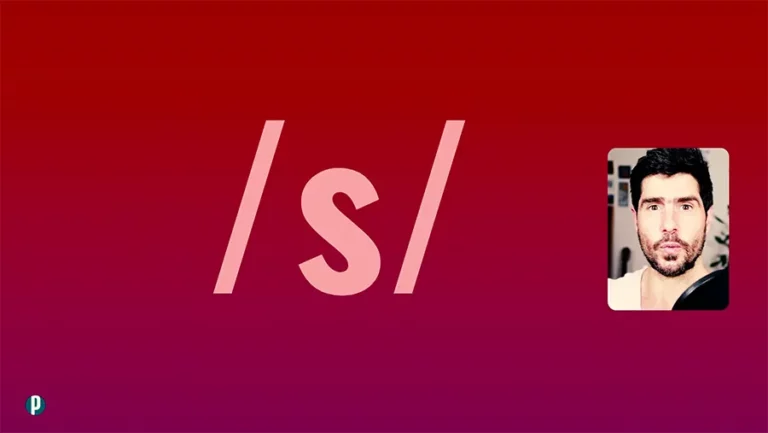
Portuguese has multiple spellings to represent the /s/ sound, from s at the beginning of words to ç, ss, and even x in exceptional cases.

To describe hypothetical situations that may unfold in the future, Portuguese relies on the Future Subjunctive.

Although Z often corresponds to the /z/ sound in Portuguese, it can also render /ʃ/, especially at the end of words like 'paz' or 'luz'.

When the action is hypothetical, wished for, or dependent on something else, Portuguese speakers turn to the Present Subjunctive.

To talk about what someone would do, say, or want, Portuguese offers the Conditional—but in spoken language, the Imperfect is often preferred.

The Present Subjunctive is used when the speaker isn’t stating a fact, but rather expressing a possibility, emotion, or intention.

Although há, por, and durante can all relate to time, their usage depends on whether you're referring to the present, past, or future—and whether you're describing duration or a point in time.

The Present Subjunctive appears in sentences that involve hope, fear, recommendations, or conditions—often introduced by conjunctions like que, se, or quando.

To form the Present Subjunctive in Portuguese, verbs take on new endings that reflect uncertainty, emotion, or indirect commands.