A2

Portuguese Is It-less
No it, no problem. In Portuguese, objects like 'the orange' don’t need a pronoun—just a well-placed verb in the third person.

No it, no problem. In Portuguese, objects like 'the orange' don’t need a pronoun—just a well-placed verb in the third person.

Portuguese learners often stumble over tão and tanto—two intensifiers that look similar but behave quite differently.

When two vowel sounds blend within a syllable and nasal airflow is involved, we get nasal diphthongs—a distinctive feature of Portuguese pronunciation.

In Portuguese, andar isn’t just about walking—it’s a gateway to expressing habits, conditions, and even moods.

In Portuguese, the letters G, J, and GU can represent similar sounds, but their pronunciation depends on the vowel that follows.

In Portuguese, haver is more than just a verb—it’s a tool for expressing presence, time, and grammatical structure.

In Portuguese, the preposition por often conveys a sense of movement through space—like passing by or traveling along a route.

Unlike regular vowels, nasal vowels in Portuguese involve air escaping through the nose, creating a unique sound quality.
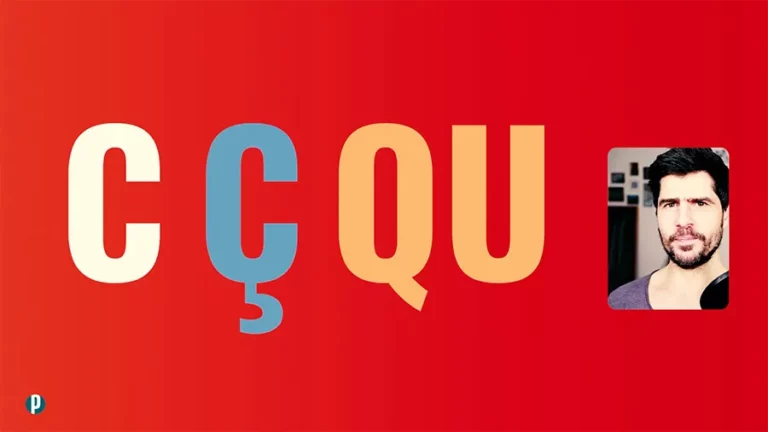
Portuguese uses C, Ç, and QU to spell the /s/ and /k/ sounds, with each letter adapting to the vowel that follows.

As one of the most commonly used verbs in Portuguese, ir plays a key role in everyday communication and future constructions.

Portuguese uses the letter H in writing, but it plays no role in pronunciation—it’s a letter you see but never hear.

This lesson focuses on the Portuguese prepositions of movement, 'a' and 'para,' and their usage.

Used in everyday speech, 'há' is a versatile form of the verb haver, signaling presence and marking time."

To express routines, ongoing events, or the backdrop of a past moment in Portuguese, we use the Pretérito Imperfeito tense.
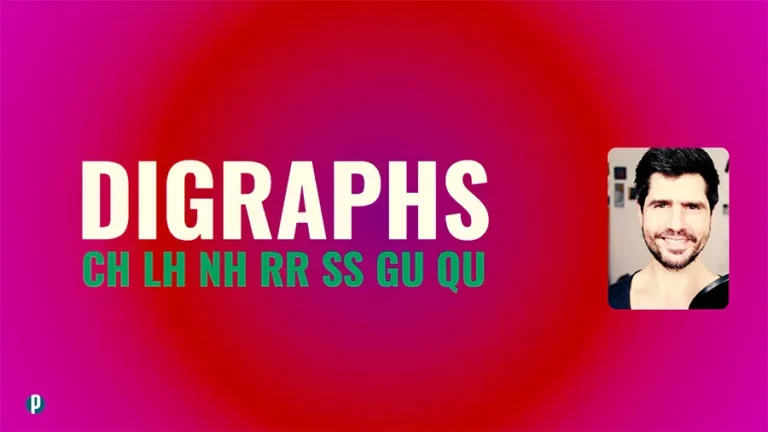
In Portuguese, a digraph is a pair of letters that combine to produce a single sound. There are seven commonly used digraphs, each contributing to the language’s unique pronunciation patterns.

The Portuguese preposition de functions as a marker of origin, possession, temporal reference, and nominal modification. It also plays a key role in numerous verb constructions, making it one of the most versatile prepositions in the language.

To express ongoing actions in Portuguese, the present continuous tense is used. This construction mirrors English in function, combining estar with the verb’s gerund form.
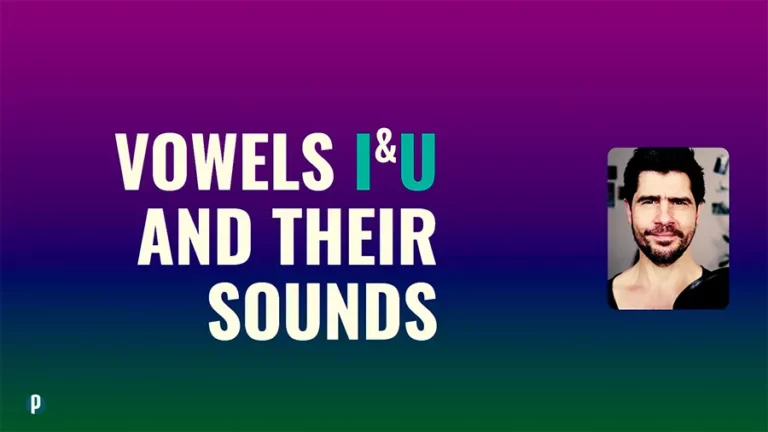
Vowels 'i' and 'o' tend to be more consistent in Portuguese, making their pronunciation easier to master.