A2

Last Week, This Month, Next Year: The Portuguese Pattern
This lesson explains how to talk about past, present, and future in Portuguese beyond “hoje”, “ontem”, and “amanhã”.

This lesson explains how to talk about past, present, and future in Portuguese beyond “hoje”, “ontem”, and “amanhã”.

Many learners associate the gerund with Brazilian Portuguese, but it’s also used in Portugal, particularly to express gradual developments over time.

In this lesson, we’ll look at how “você” is used in European Portuguese and what people actually say day to day.

In this lesson, you will learn how to talk about past actions using the pretérito perfeito, focusing on a simple and very common structure with the verb ir.

This lesson concentrates on high-frequency Portuguese irregular verbs in the pretérito perfeito, helping you recognise their patterns and apply them confidently when talking about the past.
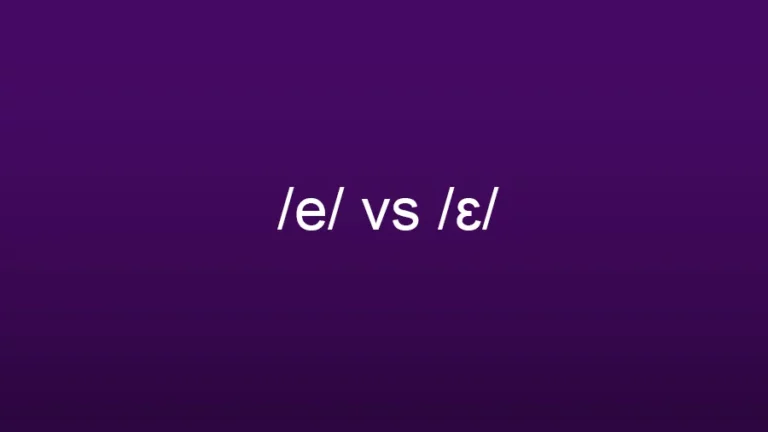
In this lesson, you will learn to distinguish between the two stressed e sounds in European Portuguese and understand when e is pronounced closed or open.

You will learn five practical expressions for talking about possibility in Portuguese and understand which grammatical structure follows each one in everyday, natural usage speech.

In this lesson we look at the structure used in European Portuguese to describe actions in progress at the present moment, and how it differs from the form commonly used in Brazilian Portuguese.

This lesson focuses on one of the most recurring topics in Portuguese grammar: the distinction between the "P. Perfeito" and the "P. Imperfeito", with direct explanations and illustrative examples.

In this lesson, we look at the difference between the Portuguese verbs ir and vir, two common movement verbs that often cause confusion for learners.

In this lesson, we focus on plural formation for words ending in L, grouping them logically so the rules are easier to understand and remember.

In Portuguese, “sempre” can introduce a question that assumes earlier discussion. Here you will learn how this form signals continuity with a previous interaction.

This lesson highlights a useful pronunciation pattern involving the vowel “o,” helping you distinguish how its sound changes in masculine and feminine adjective pairs.

In this lesson, we explore the unstressed “e” that produces the vowel /ɨ/, a central element of European Portuguese phonetics. Understanding this sound will help you achieve clearer, more natural and accurate pronunciation.

This lesson explains the cardinal points in Portuguese and teaches you how to state where a city or place is located—either within a region or in relation to another location.

This lesson provides a straightforward explanation of the preposition 'em', highlighting typical patterns, common exceptions, and the rules that guide its contracted and non-contracted forms in Portuguese.

This lesson helps clarify a common difficulty by contrasting 'andar' for general transport reference with 'ir' for movement toward a destination in everyday speech and practical travel communication contexts clearly.

This lesson focuses on a group of words that don’t follow the usual gender pattern in Portuguese. These are words ending in “a” that are masculine. We’ll see when this happens and how to understand it.