B1

Tonic Object Pronouns in Portuguese: Mim, Ti, Si, and More
A solid understanding of Portuguese tonic object pronouns enhances natural and fluent speech. These pronouns follow prepositions and emphasize the object of a sentence. Let’s take a…

A solid understanding of Portuguese tonic object pronouns enhances natural and fluent speech. These pronouns follow prepositions and emphasize the object of a sentence. Let’s take a…

Language-learning apps like Duolingo and Babbel have transformed how we acquire new languages. With millions of users worldwide, these platforms promise bite-sized, accessible lessons that seamlessly fit…

Have you ever struggled to determine whether an auxiliary verb should be followed by ‘a’ or not? For example, many students say Vou a comprar leite, but…

The Portuguese equivalent of the English Past Perfect is called Pretérito Mais-que-Perfeito, and it’s used to express an action that happened in the past before another past…
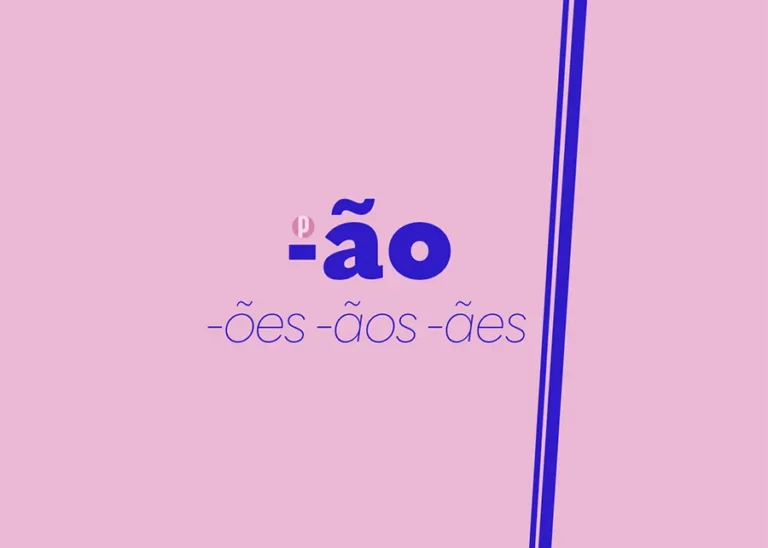
Nouns ending in the nasal diphthong ‘-ão’ are quite common in Portuguese. While one might assume these nouns form their plural by simply adding an ‘s’—resulting in…

What’s the difference between tudo and todo/toda/todos/todas? These are all indefinite pronouns often translated as “all” in English, though tudo is more commonly rendered as “everything.” But…

What are the Portuguese equivalents of “much” vs “many” and “little” vs “few”? To answer this question, it’s essential to understand the difference between mass nouns and…

In Portuguese, like in other Romance languages, double negation is a very common feature. What is double negation? Double negation occurs when two negative elements are used…
Rhotic sounds, often referred to as ‘r’ sounds, are a defining feature of European Portuguese pronunciation. In short, in European Portuguese, the letter ‘r’ produces 2 sounds:…
In short, the Pretérito Perfeito Simples is used to describe complete actions, whereas the Pretérito Perfeito Composto (also known as the Preterite) conveys an ongoing temporal quality, particularly when something has been happening recently. Read…
You have probably noticed that when using reflexive verbs, the reflexive pronoun placement varies – sometimes comes after the verb, sometimes precedes the verb. The same happens…

Portuguese prepositions can take on different roles depending on the context. For example, “a” is primarily a preposition of movement, while “em” is predominantly a preposition of…

A good grasp of Portuguese pronouns is a key step toward building fluent, natural sentences and today we’re focusing on indefinite pronouns. Simply put, pronouns replace nouns…

In Portuguese, ‘de’ is used for general references to the mode of transport, while ’em’ is used for specific instances. Remember, ‘de’ remains in its basic form,…

In Portuguese, as in many languages, the day is divided into distinct segments corresponding to various times and routines. This article will help you navigate the terminology…

In this post, you will learn the essentials of telling the time in Portuguese, including vocabulary, phrases, and useful tips. Basic Vocabulary for Telling Time in Portuguese…

Mastering Portuguese small talk is an essential step for anyone learning the language. It’s not just about exchanging words—it’s about building confidence, connecting with people, and practicing…
Nasal sounds are one of the most distinctive and challenging aspects of learning Portuguese. These unique sounds are a hallmark of the language’s phonetic system and play…