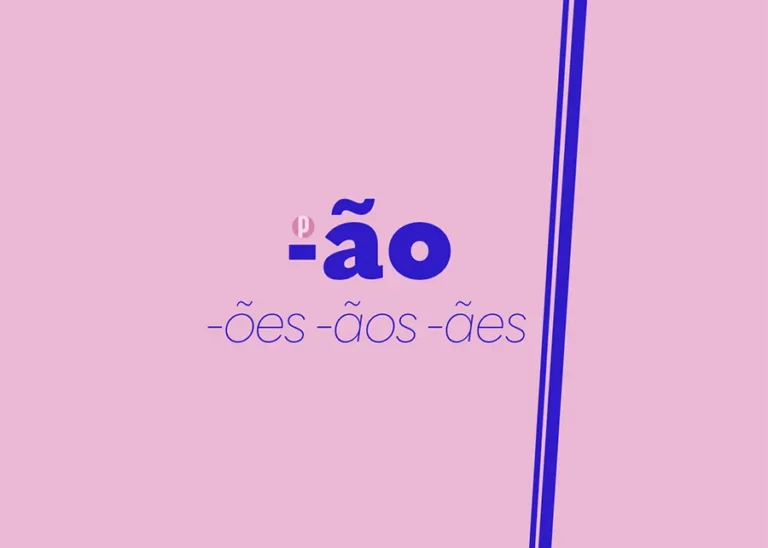
Plural Endings to Portuguese Nouns Ending in -ão
Nouns ending in the nasal diphthong ‘-ão’ are quite common in Portuguese. While one might assume these nouns form their plural by simply adding an ‘s’—resulting in…
Nouns ending in the nasal diphthong ‘-ão’ are quite common in Portuguese. While one might assume these nouns form their plural by simply adding an ‘s’—resulting in…

Fill in the blanks with the missing question words and prepositions.

What are the Portuguese equivalents of “much” vs “many” and “little” vs “few”? To answer this question, it’s essential to understand the difference between mass nouns and…

In Portuguese, like in other Romance languages, double negation is a very common feature. What is double negation? Double negation occurs when two negative elements are used…

Double negation is a natural part of Portuguese grammar, often combining não with words like 'nada', 'ninguém', or 'nenhum'.

In Portuguese, as in many languages, the day is divided into distinct segments corresponding to various times and routines. This article will help you navigate the terminology…

From casual chats to formal timetables, Portuguese offers clear patterns for asking and expressing the time.
Fill in the blanks with 'tão,' 'tanto,' 'tanta,' 'tantos,' and 'tantas.'

Que horas são? Learn how to ask the time in Portuguese and how to answer, from quarter past and half past to the 24-hour clock used for schedules.

Whether you're planning your day or greeting someone, knowing the parts of the day in Portuguese makes communication smoother.

Mastering Portuguese small talk is an essential step for anyone learning the language. It’s not just about exchanging words—it’s about building confidence, connecting with people, and practicing…

When learning Portuguese, a common source of confusion is understanding the difference between adjectives and adverbs. Both play crucial roles in the language, but they serve distinct…

While both adjectives and adverbs add detail to sentences, they do so in distinct ways—this article will help you spot the difference with ease.

Understanding which spellings align with the reform is key—especially when encountering mixed usage in newspapers, books, and online content.

Turning singular words into plurals in Portuguese isn’t random—it follows clear spelling conventions, especially for nouns and adjectives.

Understanding how Portuguese nouns change from masculine to feminine (and vice versa) starts with recognizing the spelling cues built into the language.

Whether a noun is masculine or feminine in Portuguese determines how surrounding words like adjectives and pronouns must agree.

Portuguese learners often stumble over tão and tanto—two intensifiers that look similar but behave quite differently.