
Portuguese Connected Speech – S Between Vowels
As you get used to native Portuguese speech, you’ll notice that 's' doesn’t always sound the same—especially when it’s surrounded by vowels.
As you get used to native Portuguese speech, you’ll notice that 's' doesn’t always sound the same—especially when it’s surrounded by vowels.
Rhotic sounds, often referred to as ‘r’ sounds, are a defining feature of European Portuguese pronunciation. In short, in European Portuguese, the letter ‘r’ produces 2 sounds:…

Portuguese rhotics are a vocal landmark—whether it’s a soft tap or a gutural trill, the letter ‘r’ plays a central role in pronunciation.
Nasal sounds are one of the most distinctive and challenging aspects of learning Portuguese. These unique sounds are a hallmark of the language’s phonetic system and play…

Nasal consonants play a key role in Portuguese pronunciation, and their spelling often reflects the nasal airflow behind the sound.

The /ʃ/ sound (as in shine) is arguably the most prominent sound in European Portuguese. In fact, it’s often cited as one of the key reasons why…
Let’s talk about the relationship between spellings and spoken sounds. Portuguese, like many languages, isn’t a case of “what you see is what you get.” Letters can…

Portuguese has multiple spellings to represent the /s/ sound, from s at the beginning of words to ç, ss, and even x in exceptional cases.

Although Z often corresponds to the /z/ sound in Portuguese, it can also render /ʃ/, especially at the end of words like 'paz' or 'luz'.
Digraphs are two letters coming together to represent a single sound. Today, we’ll explore seven digraphs common in Portuguese and the sounds they produce. Companion read Related…

From pai to mãe, Portuguese diphthongs create distinctive vowel glides that give the language its musical quality.

When two vowel sounds blend within a syllable and nasal airflow is involved, we get nasal diphthongs—a distinctive feature of Portuguese pronunciation.

In Portuguese, the letters G, J, and GU can represent similar sounds, but their pronunciation depends on the vowel that follows.

Unlike regular vowels, nasal vowels in Portuguese involve air escaping through the nose, creating a unique sound quality.
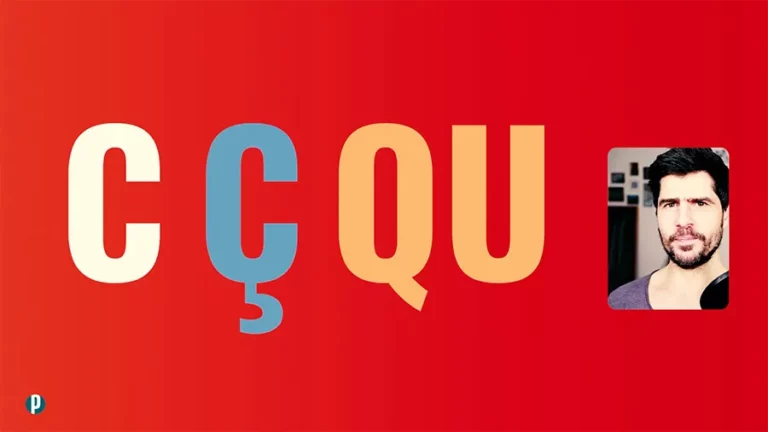
Portuguese uses C, Ç, and QU to spell the /s/ and /k/ sounds, with each letter adapting to the vowel that follows.

Portuguese uses the letter H in writing, but it plays no role in pronunciation—it’s a letter you see but never hear.
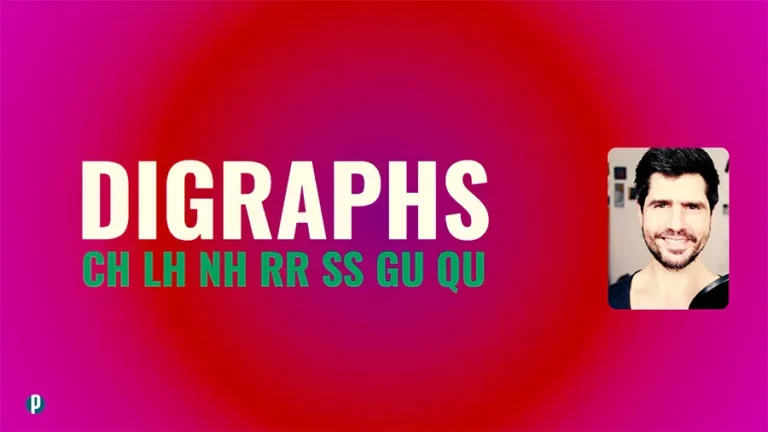
In Portuguese, a digraph is a pair of letters that combine to produce a single sound. There are seven commonly used digraphs, each contributing to the language’s unique pronunciation patterns.

Vowels 'i' and 'o' tend to be more consistent in Portuguese, making their pronunciation easier to master.