Descobre as origens celtas do Dia das Bruxas e como esta tradição é celebrada em Portugal hoje em dia.
Text hidden. Listen first, then check yourself with Captions or Transcript.
Transcript
O Dia das Bruxas, também conhecido como Halloween, tem origem em celebrações ancestrais dos povos celtas.
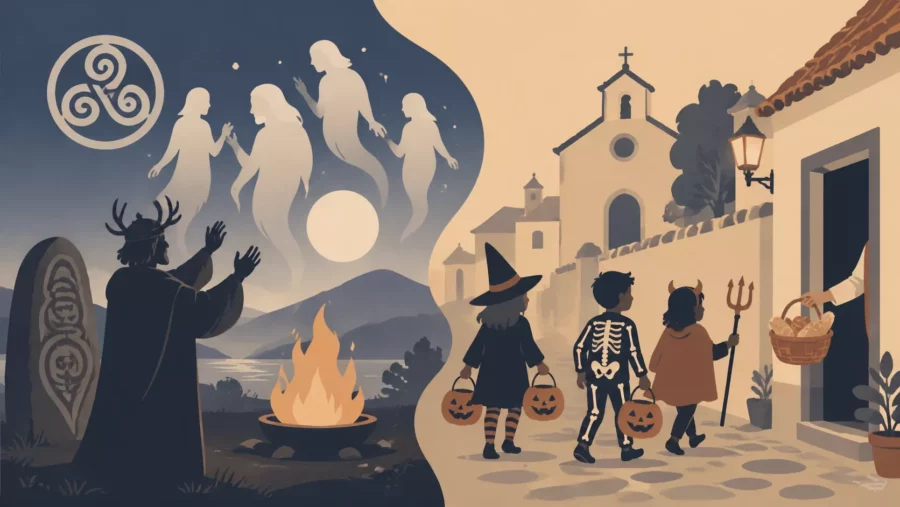
Marcando o fim do verão e o início do inverno, os celtas acreditavam que neste dia seria possível comunicar com os espíritos dos mortos. Com o passar do tempo, esta tradição pagã foi sendo absorvida pelo Cristianismo e eventualmente daria lugar ao Dia de Todos os Santos.
Em Portugal, o Halloween é uma celebração relativamente recente, influenciada pela cultura anglo-saxónica. Crianças, principalmente nas grandes cidades, vestem-se com fantasias um pouco assustadoras e brincam ao “Doçura ou Travessura,” a versão Portuguesa do “Trick or Treat”.
Em algumas regiões ainda se preservam tradições mais antigas como o “Pão por Deus”, onde as crianças vão porta a porta e pedem pão e guloseimas.
Translation
Halloween has its origins in the ancient celebrations of the Celtic people.
Marking the end of summer and the beginning of winter, the Celts believed that on this day it was possible to communicate with the spirits of the dead. Over time, this pagan tradition was absorbed by Christianity and eventually gave way to All Saints’ Day.
In Portugal, Halloween is a relatively recent celebration, influenced by Anglo-Saxon culture. Children, especially in the big cities, dress up in spooky costumes and play “Doçura ou Travessura,” the Portuguese version of “Trick or Treat”.
In some regions, older traditions are still preserved, such as “Pão por Deus” (Bread for God), where children go door to door and ask for bread and treats.