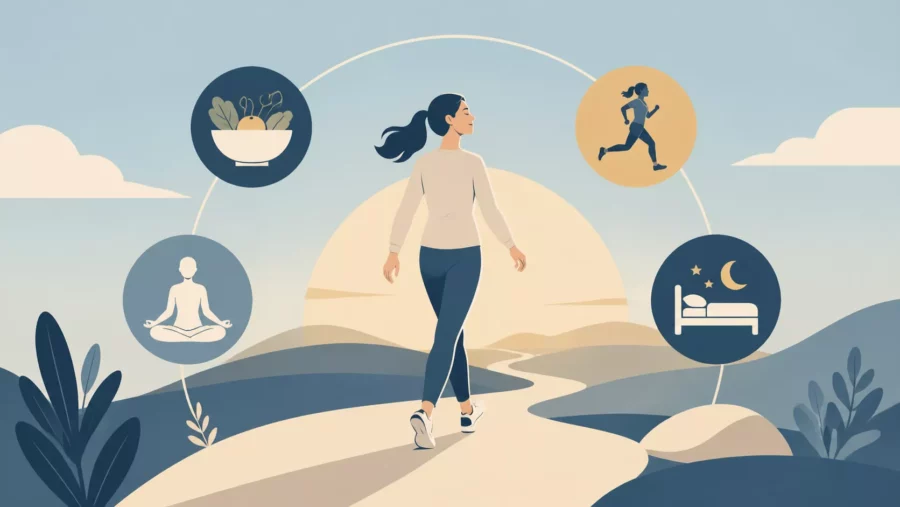
Como desacelerar o envelhecimento com hábitos mais saudáveis e equilibrados.
Text hidden. Listen first, then check yourself with Captions or Transcript.
Transcript
Apresentador
E bárbara, podíamos começar por aqui. Afinal, o que é isto do “slow aging”?
Convidada
Olha, o “slow aging” é um projeto que que visa ajudar as pessoas realmente a alcançarem a tão desejada longevidade de uma forma saudável, equilibrada e feliz.
O que é que isto é? Eu comecei-me aperceber que de facto as pessoas, especialmente em Portugal, ainda se tratam muito mal. Ou seja, têm uma má alimentação, vivem uma vida cheia de stresse, não fazem quase exercício físico nenhum. Ou seja, num todo, não têm rotinas que de facto lhes deem qualidade de vida.
E o que é que acontece? Quando chegam aos 50, 60, 70 anos, passam a vida em médicos e nos hospitais à espera às vezes, como eu costumo dizer, de morrer, em vez de estarem a viver uma vida plena de saúde.
E então houve uma altura da minha vida, mais ou menos por volta dos 40, 41, quando tive o meu segundo filho, que senti que realmente perdi imensa energia, tive uma série de questões hormonais e comecei-me a interessar muito por esta área da nutrição.
E então comecei a estudar a parte da nutrição, a parte do coaching, e comecei a aplicar todo o tipo de ferramentas que estava a estudar em mim, e percebi que ao fim de dois, três meses toda a minha energia e a minha vitalidade tinham mudado radicalmente.
* Pequenas alterações foram feitas ao original para melhorar legibilidade e coerência.
Translation
Host
And Barbara, we could start here. What is this “slow aging” thing anyway?
Guest
So, “slow aging” is a project that aims to help people achieve the longevity they desire in a healthy, balanced, and happy way.
What is it? I began to realize that people, especially in Portugal, still treat themselves very badly. In other words, they have a bad diet, live a stressful life, and do almost no physical exercise. In other words, on the whole, they don’t have routines that actually give them quality of life.
And what happens? When they reach 50, 60, 70 years old, they spend their lives with doctors and hospitals waiting sometimes, as I often say, to die, instead of living a healthy life.
And then there was a time in my life, more or less around 40, 41, when I had my second child, that I felt I’d really lost a lot of energy, I had a series of hormonal issues and I became very interested in this area of nutrition.
And so I started studying nutrition, coaching, and I started applying
all kinds of tools I was studying on myself, and I realized that after two or three months my whole energy and vitality had changed radically.
*Observador podcasts, “Conversas de Fim de Tarde,” Dec 27, 2021