A história do bacalhau em Portugal entre pesca local e importações antigas.
Text hidden. Listen first, then check yourself with Captions or Transcript.
Transcript
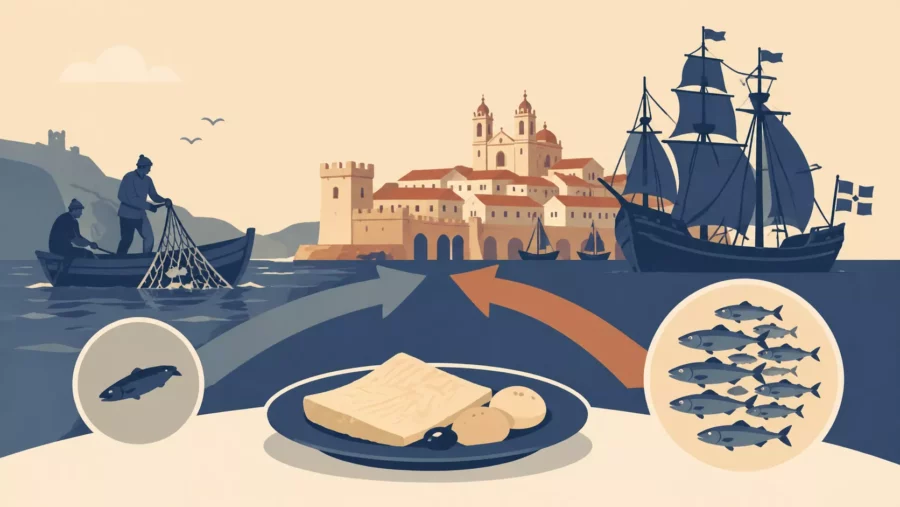
[…] Finais do século XV, as primeiras viagens. Inícios do século XVI, há notícia e o registo de desembarques de descargas de bacalhau salgado verde em portos portugueses dessa época.
Depois, a pescaria portuguesa, portanto, a produção nacional, podemos considerar assim, é muito irregular e é relativamente reduzida. E ao mesmo tempo havia importações, ou seja, negócio importador através de mercadores ingleses nas praças de Lisboa e do Porto.
Desde a época moderna isso já está documentado e é muito regular essa prática social e económica. E, aliás, avantajou-se à pesca de produção nacional.
Portanto, historicamente, Portugal importa mais do que propriamente produz e o hábito generalizado de consumo está relacionado com isso.
* Pequenas alterações foram feitas ao original para melhorar legibilidade e coerência.
Translation
[…] By the end of the 15th century, the first voyages. At the beginning of the 16th century, there are records of the unloading of green salted cod in Portuguese ports.
After that, the Portuguese fishery, meaning national production, let’s put it this way, is very irregular and relatively small. At the same time, there were imports, i.e. import business through English merchants in Lisbon and Oporto.
This has been documented since modern times and this social and economic practice is very regular. In fact, it took precedence over national fishing.
So, historically, Portugal imports more than it produces and the widespread habit of consumption is related to this.
* Observador podcasts, “Bacalhau com todos” ep. Dec 17, 2019